
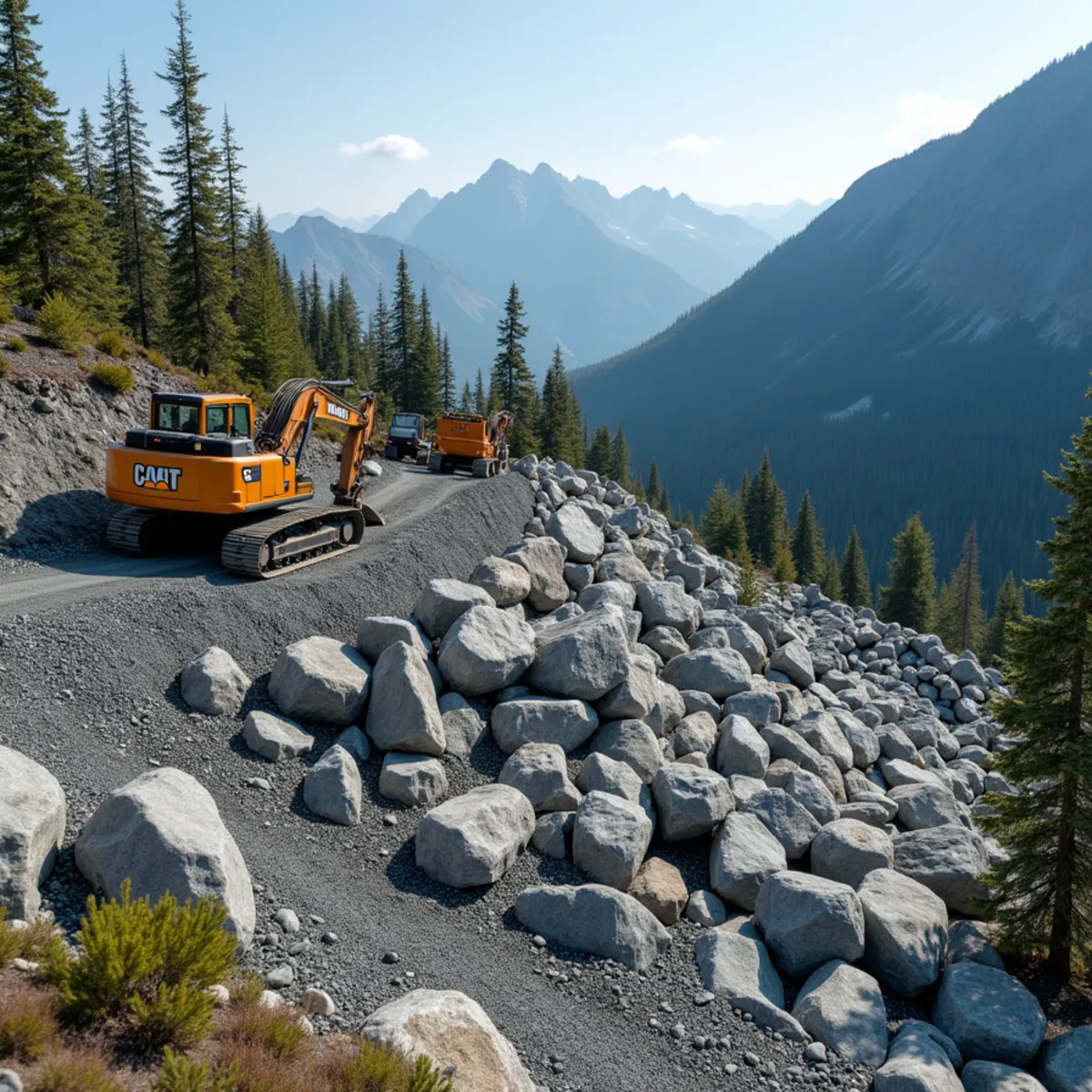
Building Boulder Rock Walls in Alaska: Engineering Retaining for Severe Frost Heave
Why standard retaining wall construction fails in Alaska. Geotechnical best practices for boulder selection, base compaction, and hydrostatic drainage behind walls.
Building durable boulder rock walls in Alaska requires deep base excavation below the frost line (18–24 inches), setting heavy native granite stones with a negative inward batter, lining the wall backface with geotextile filtration fabric, and backfilling with clean washed drainage rock to eliminate hydrostatic freezing pressure.
The Physics of Frost Heave Against Retaining Walls
When moisture in the soil behind a wall freezes into ice lenses, it expands with over 30,000 pounds per square foot of hydrostatic force. Lightweight concrete segmental blocks and treated wood timbers simply cannot resist these lateral loads, leading to bowing and collapse.
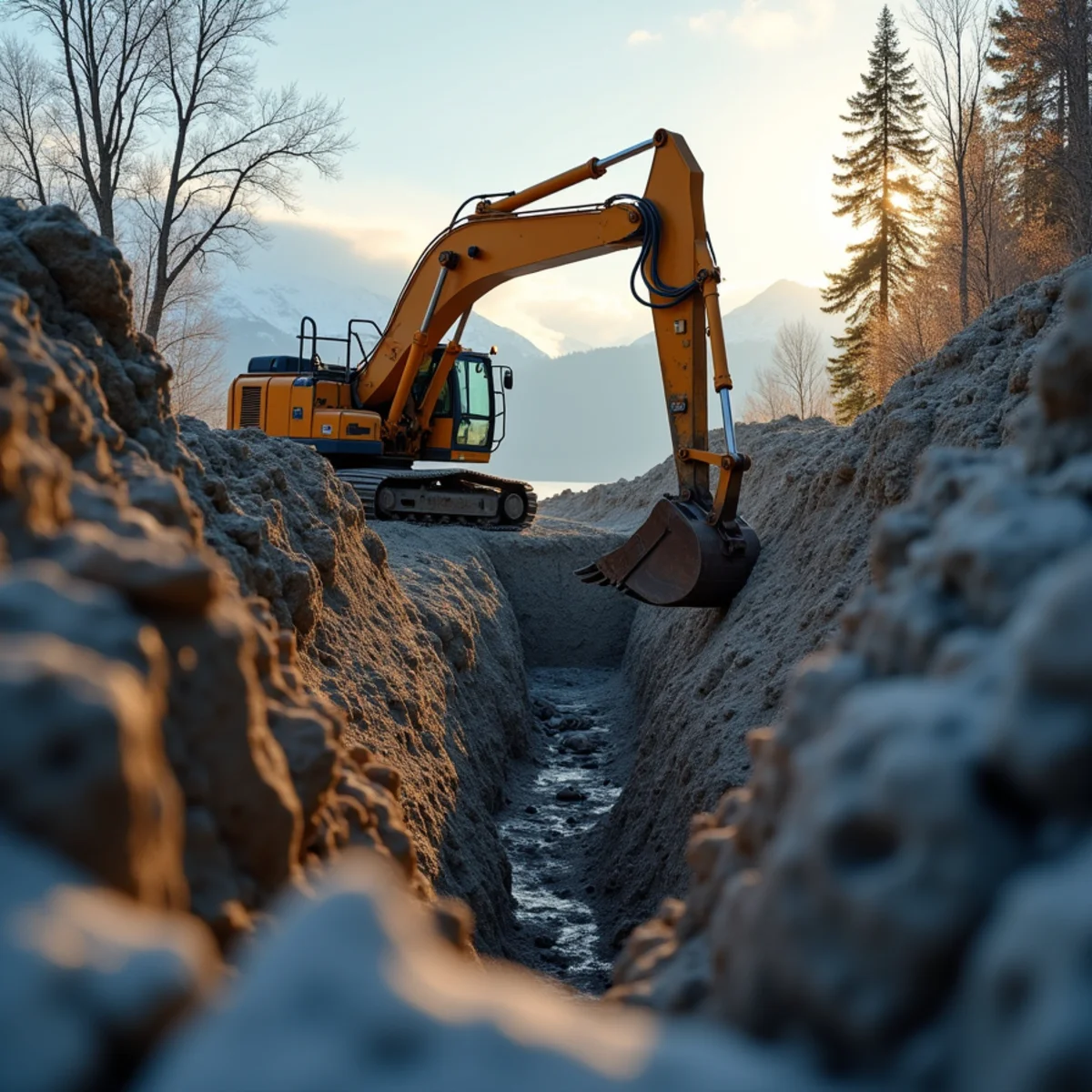
The Natural Boulder Advantage
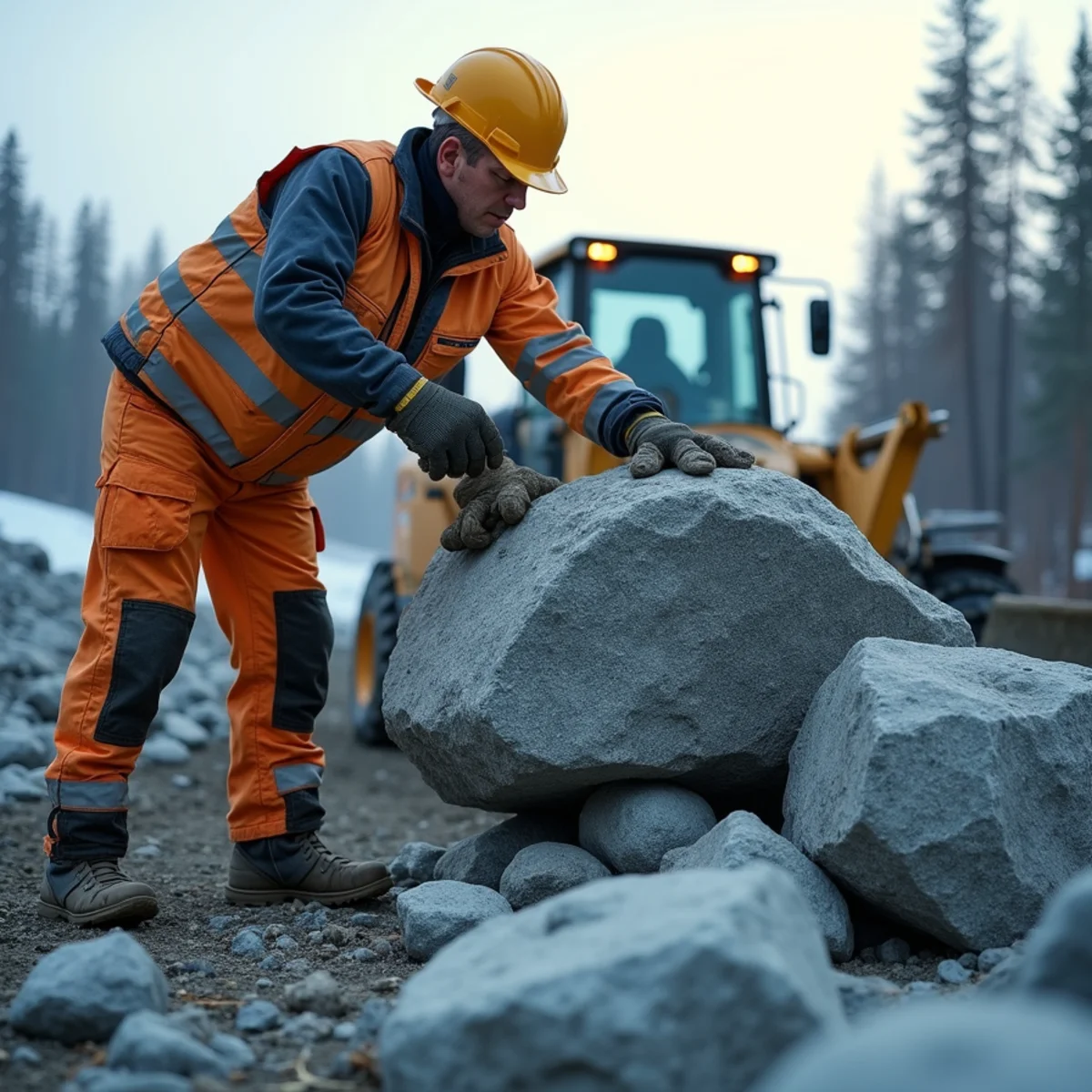
Massive natural Alaskan granite and basalt boulders possess immense physical mass. By keying foundation boulders deep into compacted non-frost-susceptible gravel and leaning successive tiers back into the hillside, the wall utilizes gravity and interlock to withstand frost thrust.
Mandatory Washed Rock Backdrainage
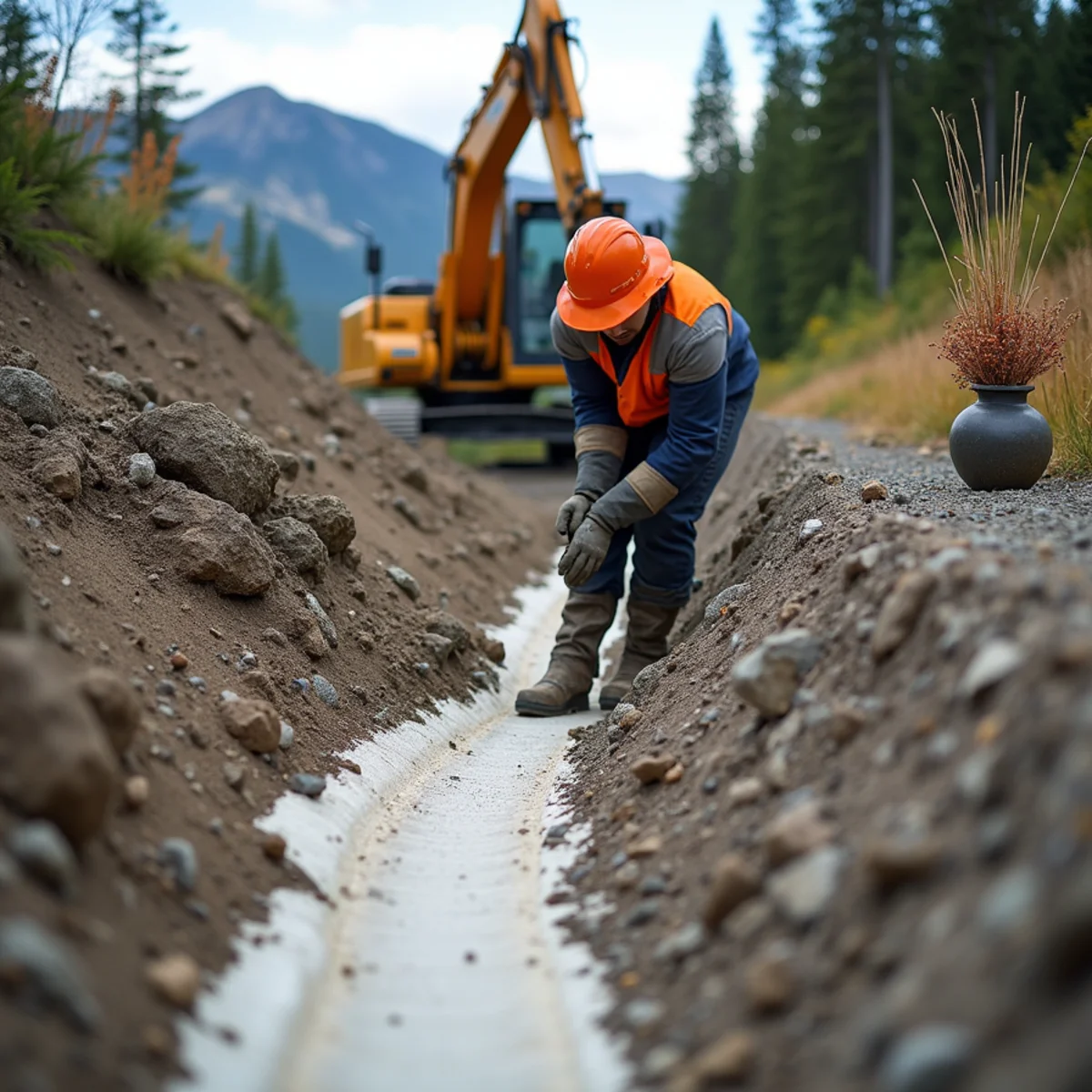
The most critical component of an Alaskan rock wall is invisible from the front: a continuous 12-to-18 inch backfill of clean washed drain rock wrapped in non-woven geotextile fabric with perforated drainage pipe at the base to discharge water before it freezes.
Alaskan Boulder Wall Construction Matrix
| Wall Component | Engineering Specification | Function in Sub-Arctic Terrain |
|---|---|---|
| Base Trench Depth | 18 to 24 inches below grade | Eliminates differential settlement from shallow frost heaving |
| Footing Bedding | 6–8 inches compacted fractured rock | Creates non-yielding structural foundation pad |
| Batter Angle | 1:6 inward tilt toward hillside | Mechanical resistance against horizontal earth surcharge loads |
| Drainage Backfill | 12–18 inches washed round/crushed rock | Permits water to exit freely before freezing into ice lenses |
Geotechnical Principles for Sub-Arctic Retaining Walls
- Never use native silty soil as backfill behind a retaining wall; silt holds moisture that expands by 9% when freezing, crushing walls from behind.
- Always install a continuous perforated 4-inch drain pipe at the base of the drainage rock layer daylighting to a planned surface outfall.
- Stagger vertical joints between boulder courses to create structural mechanical interlock across the entire face.
Frequently Asked Questions About This Topic
Straightforward answers from experienced Alaskan earthwork and landscaping contractors.
Related Professional Services
20+ Years of Sub-Arctic Groundwork in Wasilla & Mat-Su
Grounded in USDA NRCS soil surveys, Alaska DEC wastewater engineering, and local frost-heave mitigation standards.
Talk Directly With an Experienced Local Operator
Whether you need emergency storm recovery, foundation thaw drainage, gravel pad construction, or seasonal land clearing, Norton Management Services provides prompt dispatch across the Mat-Su Borough and Southcentral Alaska.
Need an On-Site Assessment?
Get a written estimate for your property from an experienced Wasilla contractor.
24/7 Heavy Equipment Hotline
Have an urgent tree fall, frozen septic line, or thaw flooding emergency? Call our direct line now.
(323) 606-0255